


 £ GBP
 € Euro


 From Street Food to Michelin Stars: The World's Best Food Cities
Ask anyone about their best holiday and, sooner or later, they'll tell you about a meal. The sardines eaten with your fingers on a beach in Málaga. The granita that dripped down your wrist in Sicily. The taverna owner in Crete who kept bringing plates you never ordered.
Food is one of the quickest ways to understand a place, and often the thing you remember longest. So which city deserves the title of food capital of the world? Honestly, there's no single answer. Some places earn their reputation through recipes handed down for centuries. Others win you over with street food, busy and fragrant markets, extraordinary local produce or chefs taking things somewhere new.
In this guide, we'll take you from the world's most famous culinary capitals to the Mediterranean spots where eating well is simply part of the holiday. Hungry yet? (We are.)
In a hurry? What are the best food cities in the world? Lima, Tokyo, Bangkok and Mexico City regularly top global food rankings. Closer to home, Málaga, Majorca, Naples and the Amalfi Coast, Sicily, Crete, Madeira, Bodrum, Dubrovnik and Malta are just as rewarding, built around regional produce and food traditions that go back centuries.
 Interactive Island Map
Which City is the Food Capital of the World?
It depends on who you ask, and what they're judging. Some rankings count restaurant quality and Michelin stars. Others look at street food, value for money, local traditions or how inventive the cooking is. A few names come up again and again:
- Tokyo – more Michelin-starred restaurants than any other city, and brilliant food at every price point.
- Paris – the home of classic French cooking, fine dining and pastries worth queuing for.
- Bangkok – famous for its street food, with a modern Thai restaurant scene to match.
- Mexico City – tacos, markets and cooking techniques that go back thousands of years.
What they share is a food culture so strong it's a reason to travel in itself. And you don't always need a long-haul flight to find one.
 The Best Food Cities and Destinations in the World
From Andalusian beach bars to Maltese bakeries, these Mediterranean favourites stand up to the best food cities in the world, and they're a short flight from home.
Málaga, Spain
Málaga is where Andalusian food meets the sea. Follow the smell of woodsmoke down to the beach, and you'll find espetos de sardinas: sardines threaded onto canes and grilled over an open fire, often in an old fishing boat filled with sand. Add a plate of pescaíto frito (crisp fried fish), a bowl of cold gazpacho and a good splash of local olive oil, and lunch is sorted.
Between beachfront chiringuitos, the Mercado Central de Atarazanas and tapas bars in the old town, eating here is easy and unhurried. Spanish food changes a lot from region to region, so a foodie holiday in Andalucía tastes very different to one in the Balearics or Canary Islands. Stay in one of our villas along the Costa del Sol or browse our villas in Andalucía, and the next chiringuito is never far away.
 Solmar's Top Tip
Head to Pedregalejo, Málaga's old fishing quarter, where the seafront is lined with chiringuitos and the espeto fires are lit by lunchtime.
Palma and Majorca, Spain
Majorca shows a completely different side of Spanish food, with a Balearic identity all of its own. Breakfast means an ensaïmada, a light spiral of sugar-dusted pastry, still warm from the bakery. Later comes sobrassada (a soft, paprika-spiced sausage you spread on bread), tumbet (layers of aubergine, potato and peppers in tomato sauce) and pa amb oli: crusty bread rubbed with tomato and olive oil. Simple and perfect.
In Palma, wander the stalls of the Mercat de l'Olivar, then drive out to the villages to find small family-run restaurants. Majorca is made for a villa holiday. Shop the markets in the morning, cook with whatever caught your eye, and save the evenings for eating out. Our Mallorcan villas make the perfect base.
Solmar's Top Tip
Leave room in your hand luggage. Ensaïmadas are sold in their own round boxes, ready to take home, and you'll spot plenty of them at Palma airport.
Naples and the Amalfi Coast, Italy
Few places tie food so closely to the land around them. Naples is the birthplace of pizza, and UNESCO even recognises the art of the Neapolitan pizzaiuolo. Expect soft, blistered dough, sweet tomatoes and buffalo mozzarella from the farms nearby.
Head south to the Amalfi Coast and the menu turns to fresh seafood, pasta and the coast's huge, fragrant lemons, which find their way into everything from salads to limoncello. Lunch on a cliffside terrace has a habit of stretching into the afternoon.
With one of our Amalfi Coast villas as your base, you can plan each day around markets, long lunches and simple dishes made with excellent ingredients.
Solmar's Top Tip
In Naples, order a pizza a portafoglio. It's a pizza folded into quarters and eaten on the go, just like the locals do
Sicily, Italy
Sicilian food doesn't taste quite like the rest of Italy, and that's the point. Greek, Arab, Norman and Spanish rulers all left their mark, so citrus, almonds, pistachios and a sweet-sour edge run right through the cooking.
Start with arancini, golden rice balls stuffed with ragù or cheese. Try pasta alla Norma, made with aubergine, tomato and salted ricotta, then finish with a crisp cannolo. In summer, locals eat granita for breakfast, with a soft brioche bun for dunking. (We fully support this.) Palermo's markets, like Ballarò, are loud, fragrant and full of street food.
Stay in one of our Sicily villas and bring back lemons, fresh fish and ricotta for supper on the terrace.
Solmar's Top Tip
In Palermo they're arancine and round. In Catania they're arancini and often cone-shaped. We'd suggest trying both before taking sides.
Crete, Greece
Greek food is finally getting the attention it deserves, and Crete is a big reason why. This is the Mediterranean diet at its purest: olive oil (lots of it), sun-ripened tomatoes, local cheeses, wild herbs from the hillsides and slow-cooked lamb.
Cretan cooking is simple, seasonal and tied closely to the farms around it. Take dakos: a barley rusk topped with grated tomato, crumbled cheese, oregano and a generous pour of olive oil. It's a Cretan summer on one plate. The best way to eat here is in a village taverna, sharing plate after plate with the whole table.
Pick up a few things from the local market and food soon becomes part of the rhythm of your stay in one of our Crete villas.
Solmar's Top Tip
Don't be surprised if a shot of raki and a little dessert arrive with the bill, on the house. It's a Cretan tradition, and it would be rude to say no.
Funchal, Madeira, Portugal
Madeira's Atlantic setting and subtropical climate give it a food identity unlike anywhere else in Portugal. Espetada is the island's signature: chunks of beef rubbed with garlic and salt, skewered on bay laurel sticks and grilled over hot coals. Then there's black scabbardfish, a rather alarming-looking deep-sea fish that's often served with banana. Trust us, it works.
Mop everything up with bolo do caco, a warm flatbread spread with garlic butter, and finish with a glass of Madeira wine. In Funchal, the Mercado dos Lavradores is piled high with passion fruit, custard apples and bananas grown on the island. Our Madeira villas and Funchal villas put you close to all of it.
Solmar's Top Tip
Fruit sellers at the market love handing out tasters. Enjoy them, but check the price per kilo before you buy.
Bodrum, Turkey
In Bodrum, meals are for sharing, and nobody's in a rush. Dinner usually starts with meze: smoky aubergine, garlicky yoghurt dips, stuffed vine leaves and herby salads, all passed around the table. Then comes grilled fish, eaten by the water as the lights come on around the bay.
Save room for a proper Turkish breakfast too. Picture the scene: fresh bread, cheeses, olives, tomatoes, cucumber, honey, eggs and glass after glass of tea, enjoyed slowly in the morning sun.
With one of our Bodrum villas, you can pick up herbs and vegetables from the local market and lay out breakfast on your own terrace.
Solmar's Top Tip
At many seafood restaurants, you choose your fish from the display and pay by weight. Ask the price per kilo before it goes on the grill.
Dubrovnik and the Dalmatian Coast, Croatia
Along the Dalmatian Coast, seafood rules. Expect grilled Adriatic fish dressed with olive oil, garlic and parsley, tender octopus salad, and crni rižot: black risotto coloured with squid ink. (Your teeth will turn black. Everyone's do.) Shellfish is a highlight too, especially the oysters and mussels from Ston, around an hour's drive from Dubrovnik.
The best meals here come with a view of the Adriatic, whether that's in a konoba (a small, family-run tavern) in a fishing village or on a terrace right by the water. Our Dubrovnik villas make a lovely base for eating your way along the coast.
Solmar's Top Tip
Order your fish na gradele (grilled over charcoal) with a side of blitva, a local dish of Swiss chard and potatoes drenched in olive oil.
Valletta, Malta
Maltese food is less well known, but it mixes Mediterranean, Italian, North African and British influences into something all its own. Start with pastizzi: flaky, diamond-shaped pastries filled with ricotta or mushy peas, sold for very little at bakeries across the island. Ftira, a ring-shaped sourdough bread recognised by UNESCO, is often stuffed with tuna, tomatoes, capers and olives. Rabbit is the national favourite, slow-cooked into a rich stew, and in autumn you'll spot lampuki, a local fish often baked into a pie.
In Valletta, traditional bakeries sit alongside modern restaurants, and the island is small enough to explore easily from one of our Malta villas.
Solmar's Top Tip
Pastizzi are at their best straight from the oven, so grab them from a busy pastizzeria in the morning.
More Global Food Capitals Worth Travelling For
Lima, Peru
Lima is home to some of the most celebrated restaurants on the planet, including Central and Maido. But the heart of the city's food is ceviche: raw fish cured in lime juice with chilli and red onion. Nikkei cooking, which blends Japanese technique with Peruvian ingredients, is another must-try.
Bangkok, Thailand
Eat on the street. Bangkok's stalls and night markets serve noodles, curries, grilled meats and mango sticky rice from morning till late. Street cook Jay Fai even earned a Michelin star for her crab omelette, and the city's modern Thai restaurants are some of Asia's most talked about.
Tokyo, Japan
Sushi counters, steaming bowls of ramen and yakitori grilled over charcoal in tiny bars: Tokyo does everything with real care. Many restaurants focus on a single dish, so quality is extraordinary at every price point, from a quick bowl of noodles to a counter seat at a Michelin-starred sushi bar.
Mexico City, Mexico
Tacos, tamales and rich, complex mole are just the start. Corn sits at the heart of it all, turned into masa using an Indigenous technique called nixtamalisation. Explore the markets by day, then book a table at one of the modern restaurants giving traditional dishes a new twist.
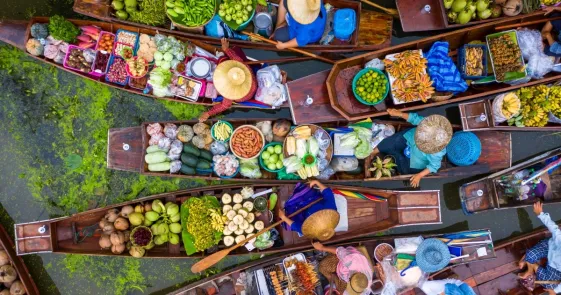

 How to Plan a Holiday Around Food
You don't need a famous reservation to eat brilliantly on holiday. A few simple habits help:
- Visit the market early in your trip. You'll see what's in season and pick up ideas for what to order (and cook) later.
- Ask about the regional speciality. Staff love being asked what's good, and it beats ordering the dish you'd have at home.
- Eat where locals eat. Busy tables and a short, handwritten menu are usually a good sign.
- Mix it up. Balance restaurant meals with bakeries, street food and market snacks.
- Learn the meal times. In Spain, dinner rarely starts before 9pm. In Crete, lunch can easily drift into the afternoon.
- Leave gaps in your plans. Some of the best meals are the ones you stumble on.
This is where a villa really comes into its own. Bring back peaches and cheese from the market, take a long breakfast on the terrace, or cook a simple supper with local ingredients after a big restaurant lunch. You eat when you want, at your own pace, and nobody's hovering to clear the table.
Taste Your Way Around the World
Food can completely change how you see a place. A market morning, a long taverna lunch or a perfect plate of grilled fish often becomes the moment you remember long after the tan fades.
That's why there's no single food capital of the world. The right one for you depends on what you dream about: street food after dark, seafood beside the Mediterranean, a village taverna, a busy market or a special-occasion dinner.
Our Mediterranean destinations cover a lot of delicious ground, from Spanish tapas and Cretan tavernas to Italian pasta and Turkish meze. We've been helping guests find the right villa since 1994, every one with its own private pool and a kitchen ready for whatever you bring back from the market.
So, where are you eating first? Explore our villas in Sicily, Crete and Andalucia and start planning.
Best Food Cities in the World FAQs
There's no official title, but Tokyo is the city most often called the food capital of the world. It has more Michelin-starred restaurants than anywhere else and excellent food at every price point. Paris, Lima, Bangkok and Mexico City are also regularly named, each for different reasons, from fine dining to street food.
It really comes down to taste. Italy, Japan, Mexico, Spain and Greece regularly top polls and food rankings. Italy is loved for simple dishes made with great ingredients, while Japan is known for precision and Mexico for depth of flavour. Our advice? Try as many as you can.
Paris, Naples, San Sebastián and Lyon are among the best food cities in Europe. Look further around the Mediterranean and Palermo, Málaga, Palma and Valletta are just as rewarding, with busy markets, street food and recipes handed down for generations.
For a relaxed foodie holiday close to home, Sicily, Crete, Andalucía and Majorca are hard to beat. Each has brilliant markets, local produce and family-run restaurants. Staying in a villa means you can shop locally, cook with regional ingredients and still eat out whenever you like.
Maido in Lima, Peru, was named the world's best restaurant in The World's 50 Best Restaurants 2025. Chef Mitsuharu Tsumura is known for Nikkei cooking, which blends Japanese technique with Peruvian ingredients. It's one of the reasons Lima now features on so many lists of the best food cities in the world.